The intelligent
evaluation pipeline
for the forgotten millions

Students in an African classroom engaged in learning

About us

Everyone deserves feedback. Most never get it.

In low-income classrooms, paper is default and feedback is slow. One teacher is teaching 40–60 students from a fixed syllabus, and the only scalable tool is paper. Students do a few assignments, results come back late — or never — mistakes repeat, and the class moves on anyway.

The “student uploads notes and gets personalized AI practice” model assumes a world that doesn’t exist here. Across Africa, only 7.7% of households have a computer at home. When device access is this rare, device-first study tools miss the students who need help most.

We started Izma because the answer isn’t more devices — it’s a smarter system around the tool that already works: paper.

Read more about us

7.7%

of African households have a computer at home

~100:1

pupil-to-teacher ratio in Sub-Saharan Africa

70%

of 10-year-olds in LMICs are in learning poverty

95%

learning poverty rate in Africa

How it works

From a pile of papers to clear decisions

Upload & Generate
Step 1

Upload & Generate

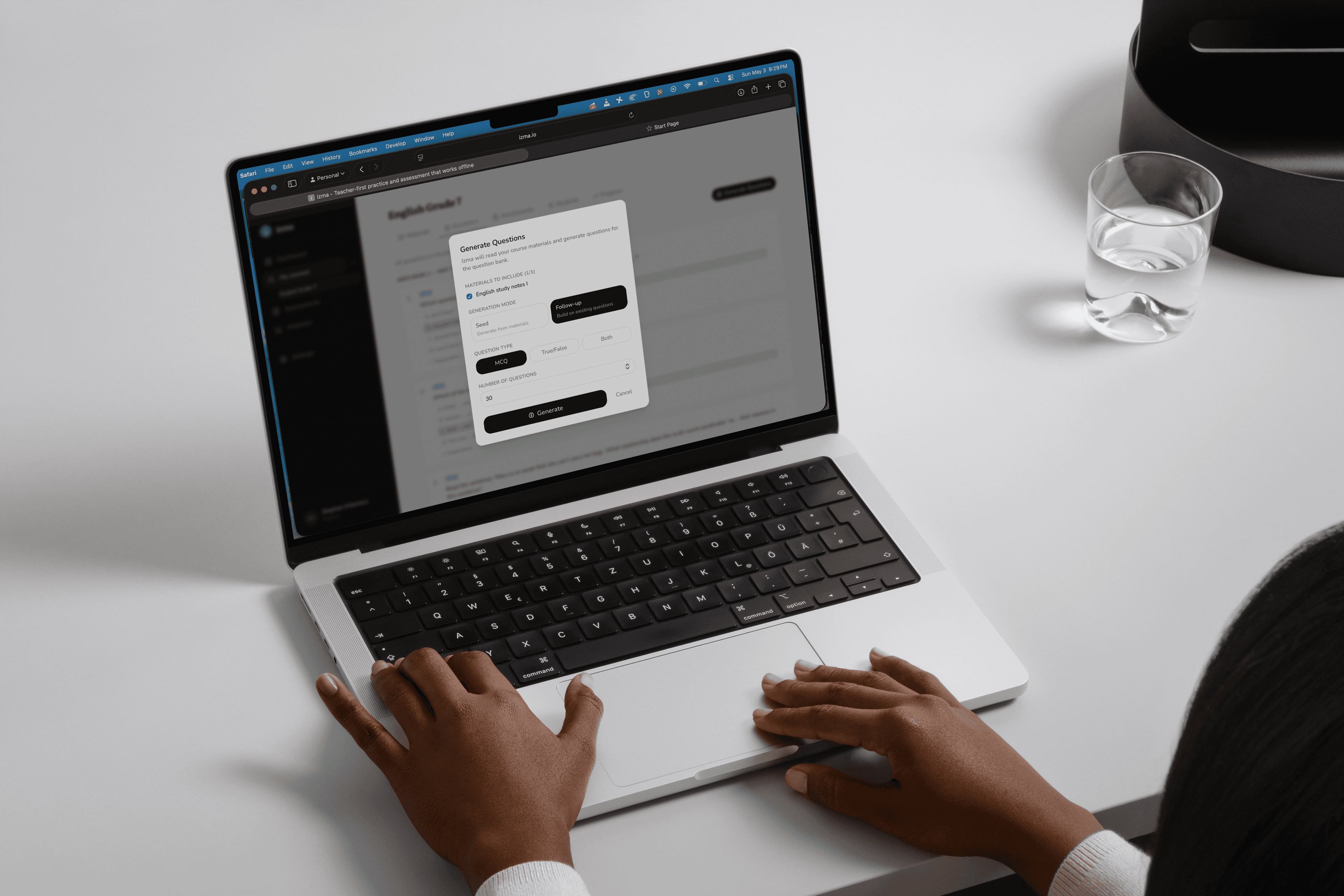
Teachers upload syllabus topics, past exams, and reference materials once. Izma generates a baseline practice packet for the whole class.
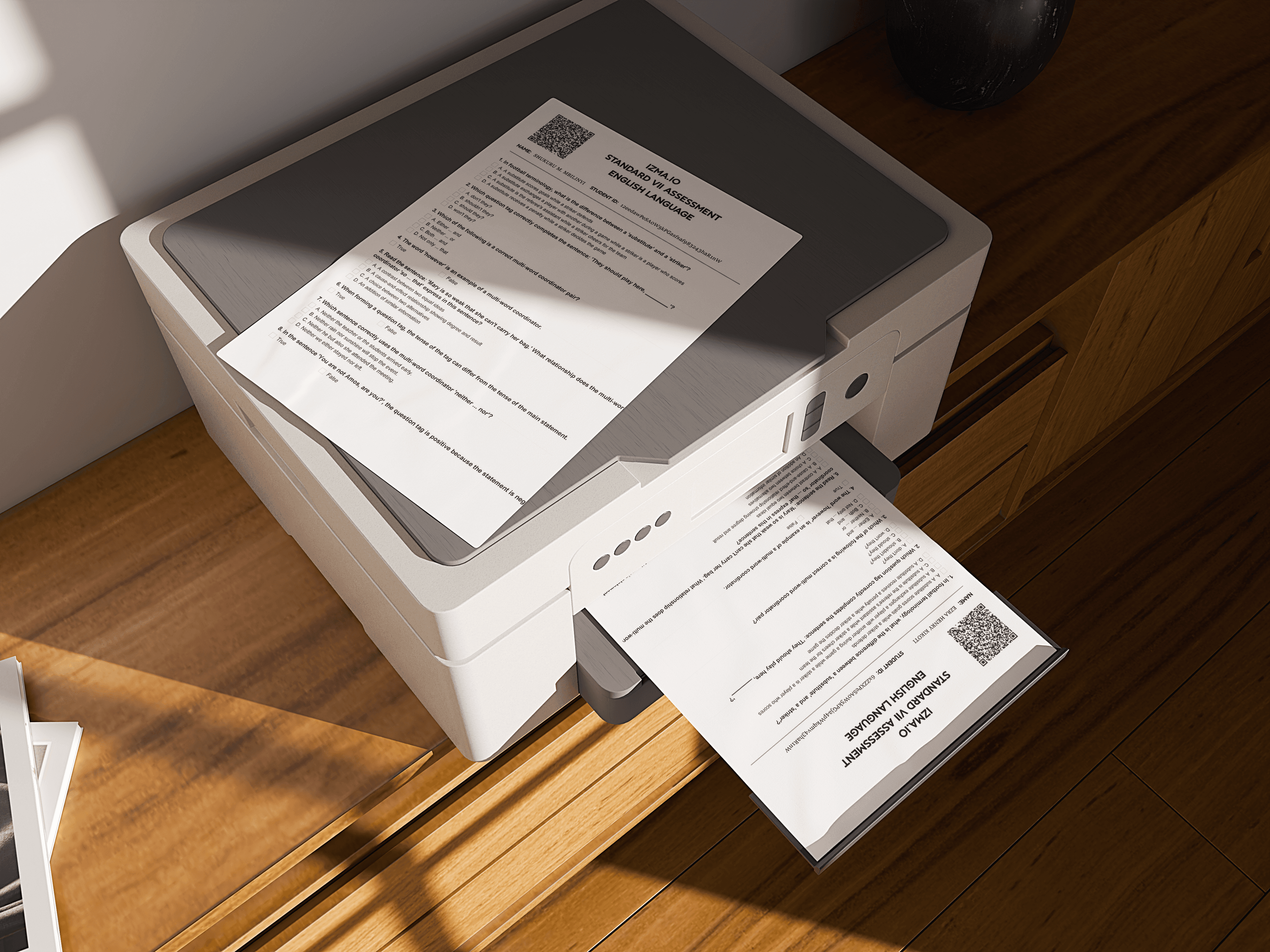
Print & Distribute
Step 2

Print & Distribute

Each student gets a printed packet with lightweight identifiers built in. No devices, no internet — just paper and pencil.
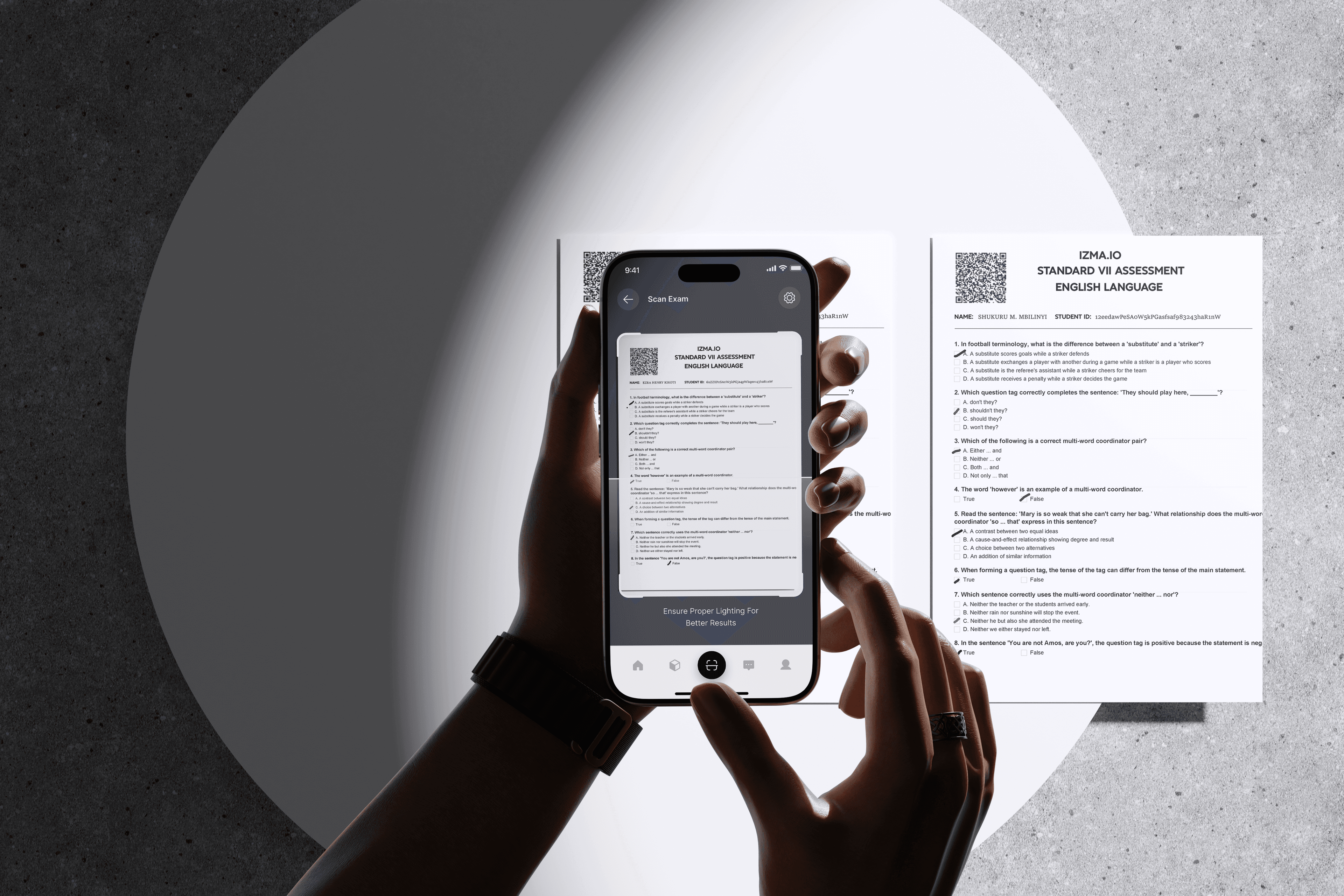
Scan & Grade
Step 3

Scan & Grade

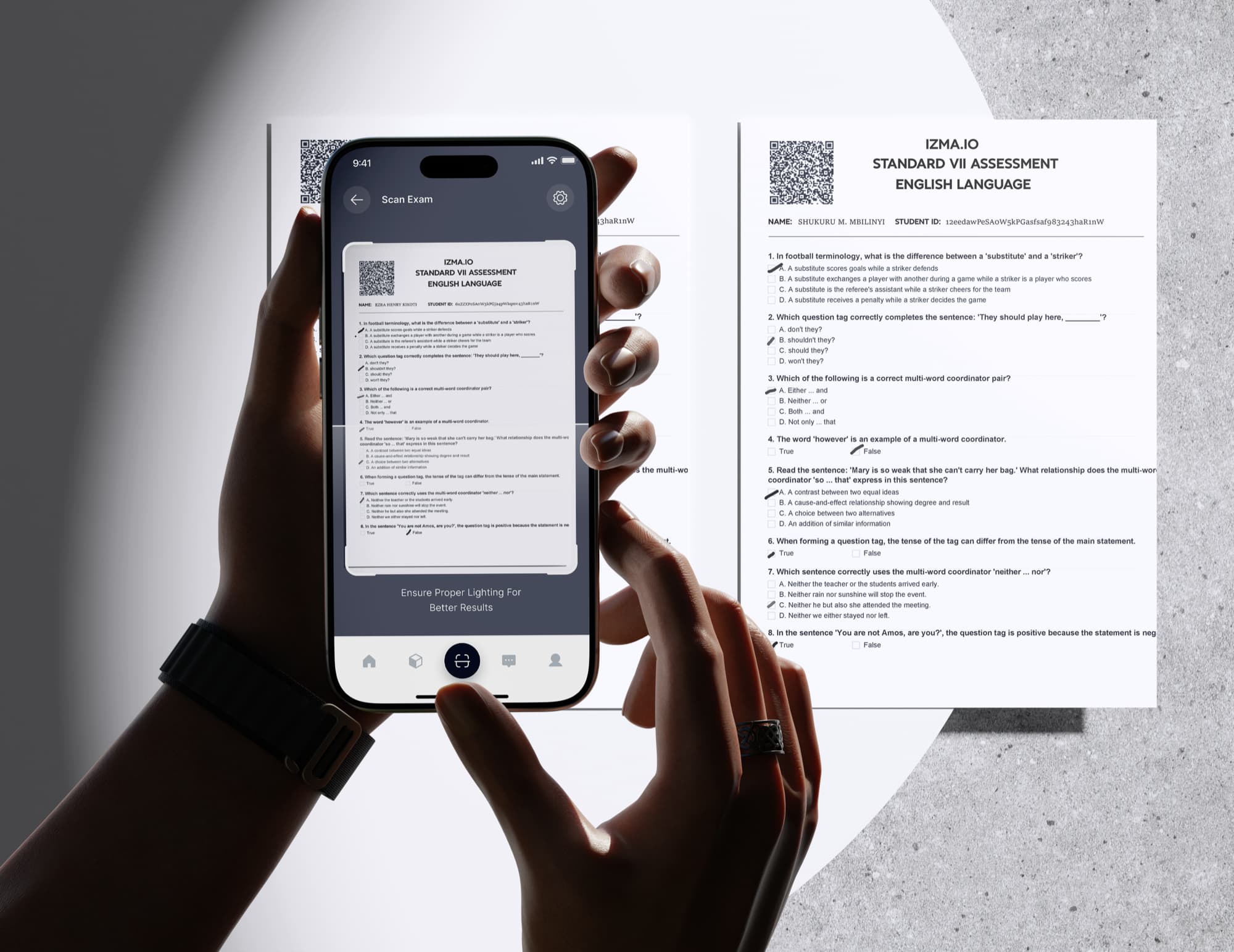
The teacher scans the stack with any phone app or shared scanner. Izma splits pages, sorts by student, and grades automatically.
Scroll to continue

Why this matters

The feedback loop is broken. We close it.

“Students practice on paper. Izma scans, grades, and spots every gap. The next packet targets exactly what each student missed — so every round of worksheets builds on the last, and no mistake goes unnoticed.”

How Izma closes the loop

Practice → Scan → Grade → Target → Repeat

Built different

What makes this pipeline compound

Scale

A shared national
question library

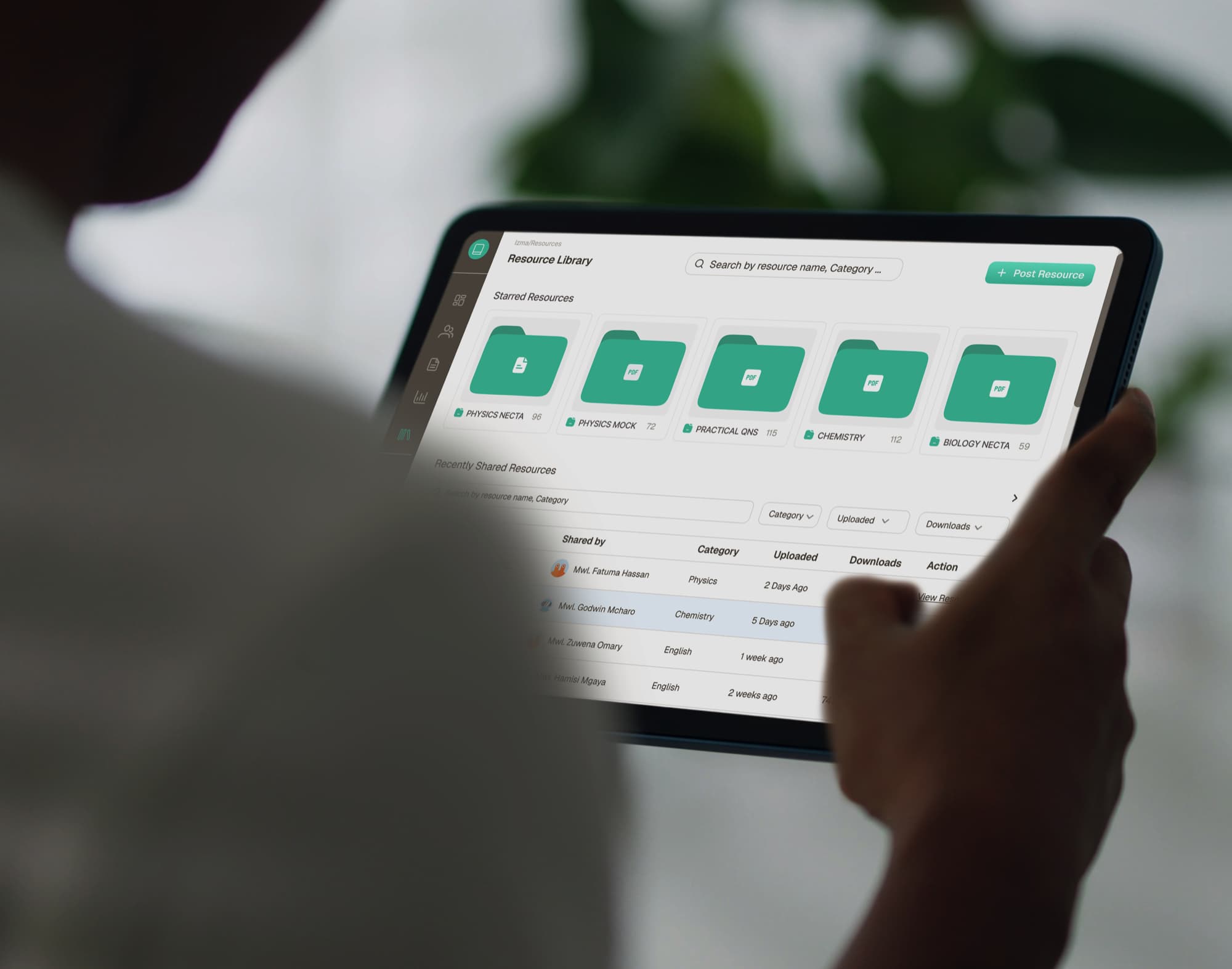
Schools following the same syllabus contribute to a shared library of vetted questions and packet templates. Generation is centralized and reused — not regenerated separately by every classroom.

Schools contributing to a shared question bank
Insight

Every gap visible,
every cycle

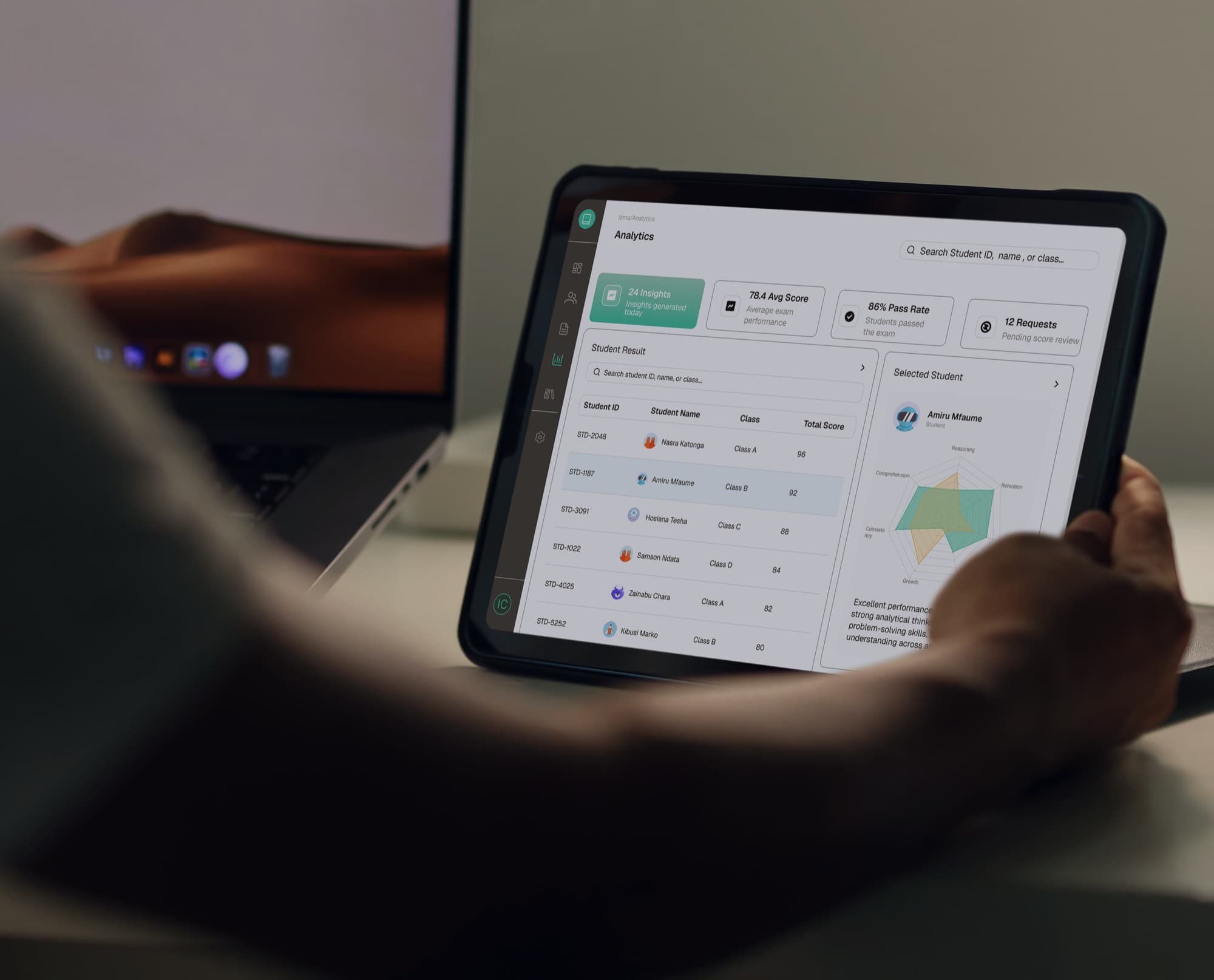
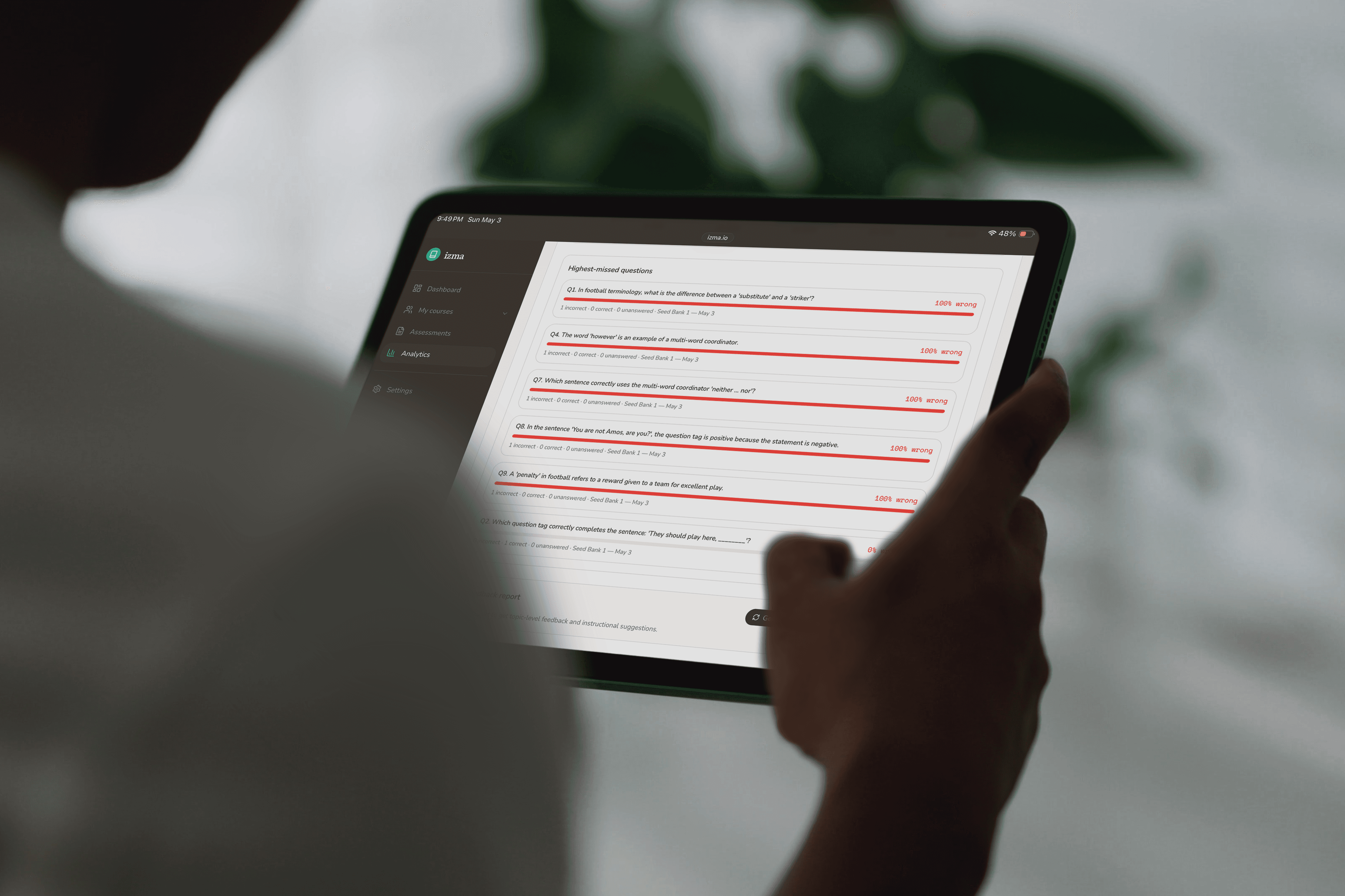
Izma builds a learning profile over time — per student, per class, per region. It shows where students struggle most by grade and topic, so teachers know exactly which syllabus areas to reinforce.

Student performance heatmap across syllabus topics
Collaboration

Peer pairing that
actually works

Izma identifies complementary strengths across students and suggests pairings or small groups so peers can support each other in a structured way. Not random — data-driven.

Student groupings based on complementary skill strengths
Control

Teacher-led,
AI-assisted

Teachers maintain full control over the syllabus sequence. Izma handles the heavy lifting — generating, grading, analyzing — so the teacher can focus on what matters: which topics to reteach, which students need help, and how to group learners.

Teacher reviewing class reports and making decisions

What they say

Love from teachers and parents

Real feedback from classrooms and homes where Izma is making a difference.

I used to spend my entire Sunday writing practice sheets. Now I upload the syllabus once and Izma gives me a full set — personalized for each student.

AT

Amina T.

Math Teacher, Grade 6, Antananarivo, Madagascar

The scanning is what won me over. I collect the papers, take photos with my phone, and by the time I sit down the grades are already there.

JK

Jean-Marc K.

Science Teacher, Lycée, Abidjan, Côte d'Ivoire

For the first time I can see exactly which topics my daughter struggles with — not just a grade at the end of term. The reports are clear and simple.

FD

Fatoumata D.

Parent of two, Bouaké, Côte d'Ivoire

With 58 students in my class, I could never give individual feedback. Izma does it for me, and the next worksheet already targets what each child missed.

RH

Rakoto H.

Primary Teacher, Fianarantsoa, Madagascar

My son went from failing math to passing in one term. The practice packets come home every week and he actually enjoys doing them because they're at his level.

CM

Clarisse M.

Parent, Abidjan, Côte d'Ivoire

The peer pairing suggestions are brilliant. I pair students who are strong in algebra with those who need help, and they teach each other. It works.

HR

Hery R.

Head of Mathematics Dept., Antananarivo, Madagascar

FAQ

Common questions

Do students need devices?+

No. Students work on printed paper. The only device needed is a phone or scanner for the teacher to upload completed worksheets.

Which countries and curricula does Izma support?+

Izma is syllabus-agnostic. Teachers upload their own syllabus topics and reference materials. We're starting with schools in Côte d'Ivoire and Madagascar, with plans to expand across Francophone and Anglophone Africa.

How does scanning and grading work?+

Teachers scan the stack of worksheets using any phone scanning app or a shared scanner. Izma splits pages, recognizes student markers, sorts submissions, and grades objective questions automatically.

What does a school need to get started?+

A printer, a phone or scanner, and internet access for the teacher. That's it. Students need nothing beyond a pencil.

How are practice packets personalized?+

Each round is generated based on the previous results. Izma targets each student's gaps while staying aligned to the class syllabus sequence, so everyone progresses together.

Is student data safe?+

Yes. Student data stays within the school's account. We follow data minimization principles and do not sell or share student information with third parties.

The evaluation pipeline yourclassroom has been missing.

Turn paper practice into fast, actionable feedback and targeted follow-up for every student — aligned to your syllabus.